Tag: teresa siles

Perpetually curious. Always questioning.  Thirsty for knowledge.  Unsatisfied with the status quo.  This is what being an “explorer” means to me. I believe it is a trait developed early on in life, perhaps even innately. On some level, you either got it or you don’t.  At Nuffer, Smith, Tucker, I’d like to think we all “got it.”

Earlier this year, we adopted a new value: Push ourselves, each other, our clients and our profession to explore.  While we finally put pen to paper on this one, the value is one that I believe has always been at the core of NST.

In a dynamic industry, success isn’t possible by resting on your laurels. What worked in the past, may not work in the future. Change is a word we must be comfortable with. More importantly, we must embrace and push for it by continual exploration.

I recently asked our team to tell me what “exploration” means to them. Here’s how they define exploration:

  • Moving past the “guide book” to see what else is out there.  Is there a different route that we can take? Is there a new way of tackling a problem that has not been thought of before? Are there new tools we can use to go farther than we have been able to go before?  (Bill Trumpfheller)
  • Taking chances and not worrying about outcome because all that matters is the experience/knowledge you will gain from having the courage to take that chance in the first place (Mary Correia-Moreno).
  • Learning through experiences, having a desire to know and do more, and being present and aware no matter where we find ourselves (Jazmine Allen).
  • Avoiding complacency and constantly innovating; no block-and-tackle tactics (Price Adams).
  • Not only learning about the latest trends, technologies and ideas, but also learning (or even re-learning) the basics – including grammar and writing style – that ultimately create the sturdiest foundation on which to grow (Natalie Haack).
  • Wondering. Searching … an ambitious drive to find the next great adventure (Michelle Livermore).
  • Constantly investigating trends and what others are up to, searching for new techniques and ideas, helping clients see things in new ways, and creating campaigns that help them navigate through the noise (Greg Kershaw).
  • It’s about movement. It’s about exploring what I’m not familiar with and using what I’ve discovered to grow and better myself. It’s about having that itch or desire to constantly be doing so and being propelled by the excitement of what exploration can deliver (Krystin Williamson).
  • Constantly having your eyes on the horizon, looking forward at what’s to come, and actively planning for the future – even if it’s unknown (Katie Rowland).
  • Trying to improve upon the method of solution that I’ve used before and always striving to improve upon my own work using the latest and greatest practices (Aaron Blomberg).
  • Not letting the fear of failure prevent you from trying something new and taking a risk. This can apply to going after new business, pitching a new campaign idea to the client, etc. (Rebecca Howe Schmidt).

Reading these thoughts from our team reminds me – once again – what makes Nuffer, Smith, Tucker so special, and why on Monday mornings when others dread going to work, I don’t.  It’s this culture of exploration that unites and drives us.


Tags: , , , ,

No Comments »

Teresa Siles

NST's Young Influential Teresa Siles

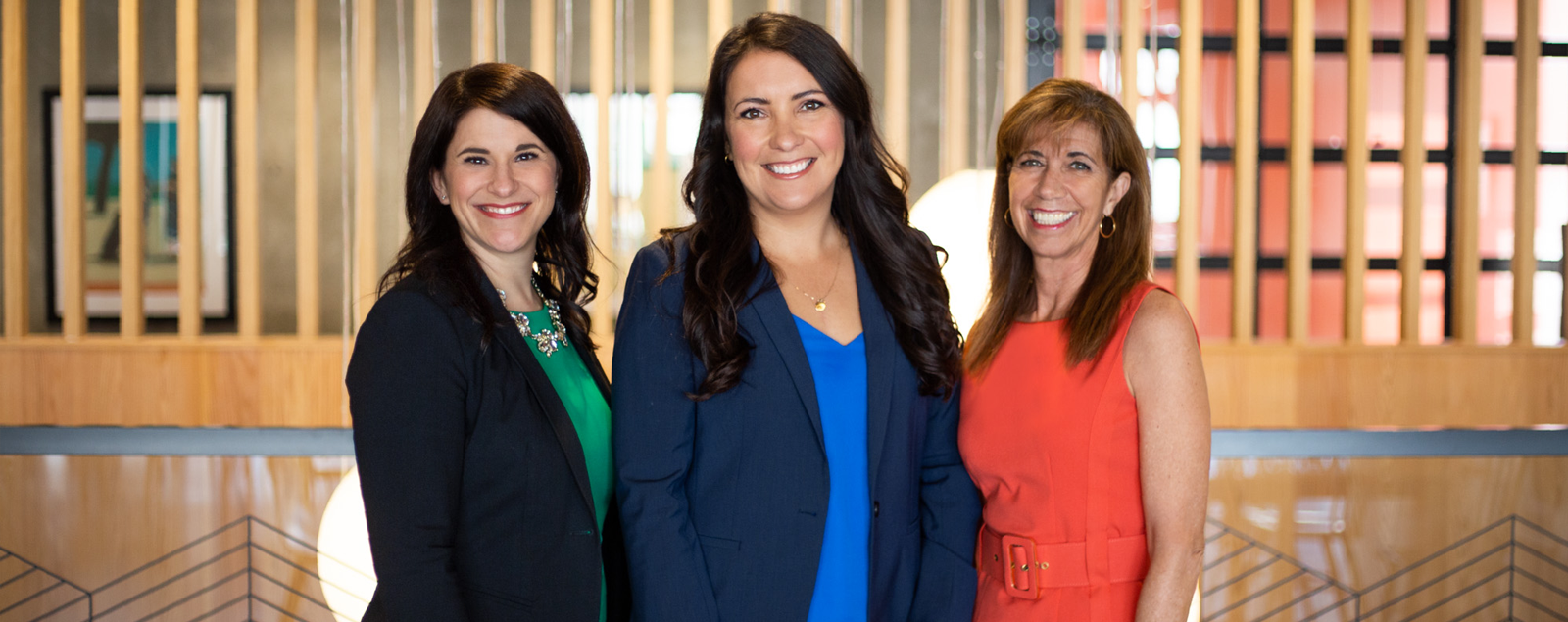
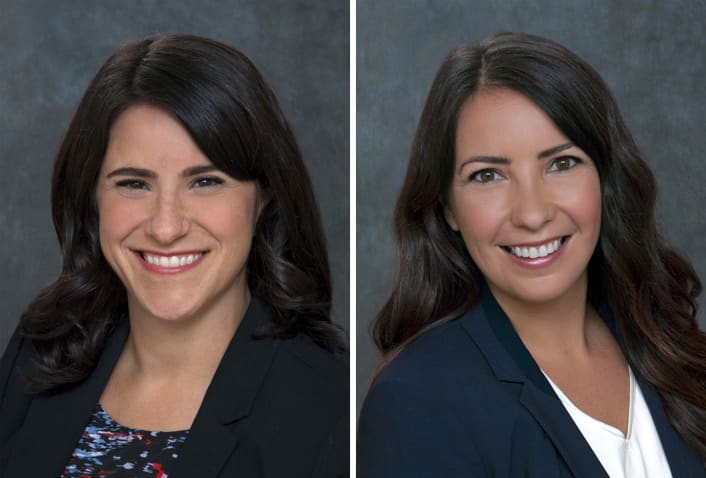
She’s young. She’s influential. She’s NST’s very own Teresa Siles! Recently named a Young Influential by the San Diego Daily Transcript, Teresa was recognized for her knowledge in social media and her efforts to ensure our agency plays a leading role in the industry.

Teresa joined NST more than 10 years ago as an intern and worked her way up to become a vice president of the firm. In fact, she’s the youngest vice president in NST’s history! Through the years, Teresa has developed a well-deserved reputation of being a leader in public relations and social media. She is creative and is constantly pushing not only her clients, but also her colleagues, to try new things and stay on the edge of change.

In addition to managing client accounts, Teresa leads NST’s social media practice. In 2009, she created the San Diego Social Media Symposium, which is now an annual one-day conference that brings together leaders in public relations, marketing, academia and the business community from across Southern California to talk about social media and how it is impacting our respective industries. The most recent symposium was held March 1, 2012 and drew more than 200 attendees.

Teresa is also a two-time graduate of WOMM-U or “Word of Mouth Marketing University,” and received her bachelor’s degree from San Diego State University (SDSU).

In her spare time, Teresa also finds time to give back. She leads a monthly social media workshop for SCORE San Diego, and serves on the marketing committee for LEAD San Diego and the advisory committee for the Digital and Social Media Collaborative at SDSU. As if all this was not enough, Teresa has also recently returned to SDSU as a student in its Executive MBA Program.

Please join me in recognizing Teresa for all her hard work and dedication not only to the profession and her clients, but also to NST and her colleagues. She is a true influential leader.


Tags: , , , , , , , , , , ,

1 Comment »

LEAD San Diego Vice President Sherrie-Lyn Thompson started out the recent LEAD IMPACT session acknowledging something we all knew to be true: there is something sensational about going into a high-security detention center, which was on our day’s agenda. The purpose, she assured us, was not entertainment but something much more significant.  By the end of the day, I knew she was right.

It was a glimpse at a life that many people will never see. As we stood in the guard area looking out at the incarcerated men, I overheard someone from the LEAD cohort say he felt strange looking at them “like they are animals.” It was a no doubt an odd experience.

From the safety of the guard’s quarters, we received an explanation of the different colored wristbands worn by inmates. Men who committed among the most disturbing of crimes (sex crimes or crimes committed against children) wore yellow bands.

While many – myself included – may find it difficult to have compassion for the men behind bars, a more thoughtful look would reveal the situations that put many men there are complex and varied. Further, the solutions for what to do with them are far more complicated than what I’ve heard proposed many times: lock ‘em up and throw away the key.  It’s this thinking that has caused many to dub America the “incarceration nation.” And while many people prefer to think of the situation as “not my problem,” the reality is as taxpayers, it is our problem. For some, it’s a fiscal problem; for others, it’s a moral one.

“It’s a sad commentary on our society when people don’t care about what happens to inmates,” said San Diego County Sheriff Bill Gore.

Even if you are among those who “don’t care,” Gore shared with the LEAD cohort a fact that may pique your interest. It’s also one that many people would prefer to ignore: more than 95 percent of inmates are released back into society. Then what? Many are lacking basic skills such as reading and writing.  Many others struggle with addiction. Unfortunately, California has among the highest recidivism rates in the nation, which are estimated by some to be as high as 80 percent in our state.  Without skills for integration with society, many return to their former lives that got them in trouble to begin with.

After touring two detention centers and the San Diego Regional Firearms Training Center, and hearing from several experts in rehabilitation, I left the day still a little unsure of what to think of it all. Later, I realized that in many ways, the people behind bars represented a culmination of societal problems and issues the LEAD cohort had been exposed to in earlier sessions.  The most obvious tie is to our discussion of behavioral health issues, including mental health and substance abuse disorders, which put people at greater risk of ending up behind bars. But ties can also be made to our education session and our discussion of developing 21st century leadership skills.

The incarceration system has problems with no easy answer, and it’s critical we think beyond simple solutions.  While undoubtedly there are incarcerated men and women who should never be allowed to walk the streets again, there are others who – like it or not – will. These men and women are someone’s child, mother, father, sister, brother, aunt or uncle. As a society, we need to be more compassionate and not take the easy way out by sweeping it all under the rug.


Tags: , , , , ,

No Comments »

Honoring Those Who Serve

Author: Teresa Siles - March 15, 2012

On the day I write this, my colleague’s husband – along with many other husbands, wives, sons, daughters, brothers and sisters – is leaving on a deployment. It reminds me of the recent LEAD San Diego IMPACT seminar in which the cohort learned about the military’s impact in San Diego, home to the largest concentration of military personnel in the world. For the men and women in the armed forces and their families, they know the impact of the military well. For the rest of us, hearing from service men and women, taking a tour of the Naval Base San Diego, and visiting the Naval Medical Center, the LEAD session was a good reminder.

As part of the experience, the IMPACT group also toured the USS Howard, where we were greeted by several sailors who took us on a ship tour.  I was struck by how young our guide looked and thought about my own brother, who is now 15 years old and considering entering the military; it was a thought I kept with me throughout the day.

The most poignant moments came at the Naval Medical Center, where we heard from the San Diego Military Advisory Council (SDMAC), and service men and women from the center. SDMAC told us the facts: the military’s presence in San Diego is responsible for $30.5 billion in economic output, $16.3 billion in household earnings, and 354,627 jobs, or about one out of every four jobs in San Diego.  We then heard about the work done at the medical center and saw a simulation video that moved us all.

It was a training video used to prepare military medical personnel for what they may see in combat. Designed to mirror real life situations, the explosions, injuries and operations were so life like that the video was stopped to make sure everyone in the class was comfortable watching it. Even knowing it was not real, it was hard to sit through.

“When people come back, they are changed. They see things most of us will never see,” said Commander Langlais, who discussed her own experiences serving. The cohort talked about the increasing instances of post-traumatic stress, and how the military is helping men and women cope.

Watching the video, I thought about what it must be like to witness the tragedies of combat in real life. I thought about what this sacrifice means not only to the individuals who serve, but to their friends, families, communities and to us all as Americans. We owe our service men and women a huge debt of gratitude. Langlais summed up well the lesson for the LEAD cohort and those in the San Diego community.

“We expect a lot of them out there, so they should expect a lot of us back here,” said Langlais.

To those not in the armed forces, let us remember the important work of our service men and women and their contributions to the fabric that makes up San Diego. Thank you to all those who serve for your important work on duty and off for our country and for our community.


Tags: , , , , , , , ,

1 Comment »

“I live a charmed life … I try to honor it by reaching out to people who don’t live the life I live,” said Kim Bond, president of Mental Health Systems (MHS), at a recent LEAD San Diego IMPACT session dedicated to health and human services. I reflected back on the LEAD session recently when I received an email from a commercial tenant in my condo complex seeking solutions to the “homeless problems” in the building.

While reading the email – which noted the “problem” erodes our enjoyment of our properties and property value – I couldn’t help but feel compassion for those homeless individuals who end up sleeping in our building’s stairwells or commercial parking spaces. I took off my hat of condo owner and dutiful HOA-dues payer, and instead wore one of concerned community member, and thought back to the discussion recently facilitated through LEAD.

The LEAD session centered mainly around “behavioral health,” a term that, according to MHS, includes both mental illnesses and challenges, and substance abuse disorders – things that are common in our community. Some estimates say as many as one out of every four people suffer from some form of mental illness, which – like substance abuse – can happen on a continuum and includes everything from anxiety and post traumatic stress disorder to depression and schizophrenia.

“What does mental health issues look like?,” said James Lepanto, senor vice president, mental health division of MHS. “Hold up a mirror. That’s what it looks like. We often think of it as ‘other’ people, but it’s not. It’s us. It’s our community.”

The LEAD cohort discussed not only how behavioral health issues affect individuals and families, but also the impact to the workforce, economy and quality of life through problems such as homelessness and strains placed on our health care and incarceration systems.

So what do we do?  LEAD attendees were reminded of the words of Mahatma Gandhi: “Be the change you want to see in the world.”

Ways you can help include:

  • Get educated. Aspects of behavioral health issues are preventable and treatable.
  • Talk about behavioral health with friends, family, colleagues or others.
  • Advocate on behalf of programs that provide solutions and address behavioral health issues head on.
  • Be empathetic.
  • Volunteer your time and talent.

By doing these things, we are playing a role in the solution, and removing the stigma around mental illness. According to MHS, every day in San Diego someone commits suicide. Others who suffer from behavioral health issues sleep in our public spaces and on our streets. We can’t – and shouldn’t – ignore the issue.


Tags: , , , , , , , , , , ,

No Comments »

What do Karl Strauss Brewing Company, San Diego Gas & Electric, San Diego Hilton Bayfront and Sony Online Entertainment have in common? Representatives from these companies will be panelists at the upcoming San Diego Social Media Symposium on March 1, 2012 – and that’s not all.  Gary Kim – who was just named #2 in Forbes list of the top 10 power influencers in mobile – will join the line-up with an hour-long discussion on trends in mobile marketing.

We are also announcing this year’s panel topics: Creating Compelling Brand Content; Online Reputation Management; and Online and Offline Word of Mouth: The Perfect Combination.

Keynote speaker, Jason Falls, author of “No Bullshit Social Media: The All-Business, No Hype Guide to Social Media Marketing”, will help answer the burning question: what about ROI?

The detailed line up and additional panelists will be announced soon, but meanwhile, don’t forget to purchase your tickets before the early bird registration date closes one week from today – January 27, 2012. Visit the website to learn more about the event.


Tags: , , , , , , , ,

No Comments »

The transformative power of art has long been known to people whose lives have been touched by it, but the ability of arts and culture to transform not only individuals, but communities at large hasn’t been given nearly as much attention.  This was the focus of a recent LEAD San Diego IMPACT session, and Councilman Todd Gloria beautifully captured the theme of the day.

“Art is not elective … it’s essential to a vibrant city,” said Gloria.

Gloria — along with other speakers, many from Balboa Park’s museums and other institutions — spoke about our city’s arts and culture offerings, and about the upcoming 2015 Balboa Park centennial celebration.

With a mission to “Celebrate a ‘year of creativity’ that brings together innovative experiences with art, culture, nature, technology and science,” the celebration is aimed at reinvigorating and elevating the park for San Diegans and visitors alike.  While specifics are under development, enthusiasm for the event is palatable, and you can’t help but feel the celebration will be something big; something defining not only for the park, but also for us as San Diegans.

“2015 is going to be the coming out party for San Diego’s creative class,” said developer David Malmuth, whose vision for arts and culture stems well beyond park boundaries.

In addition to discussing the park, Malmuth spoke to the cohort about his vision of merging art, culture, commerce and place with the I.D.E.A. district, a mixed-use district driven by a Design jobs cluster, nourished by Education, enriched by the Arts and focused on Innovation. In addition to creating “more ideas per square foot,” Malmuth says the district will not only inspire creativity, but spur economic development.

Whether talking about the upcoming Balboa Park centennial, the I.D.E.A. district or a particular museum exhibition, IMPACT attendees couldn’t helped but be moved. After all, being a San Diegan is about more than where we live and work. It’s about where we play and enjoy our lives. It’s about where our interests lie and where our sense of curiosity and wonder can be sparked, and arts and culture make San Diego what it is today.

With this perspective in mind, the message to current and future leaders is clear: advocating for arts and culture shouldn’t be something left to the “arts community” alone, but rather something we all support. And, with 2015 just around the corner, I can’t help but ask, will you join the party?


Tags: , , , , , , , ,

No Comments »

Creativity, embracing risk, questioning, systems thinking, collaboration, communication and worldview – these are among the skills needed for the 21st century, according to Grant Lichtman, chief operating officer at the Francis Parker School.

Lichtman – who was a guest speaker at LEAD San Diego’s IMPACT session dedicated to K-12 education – advocated that there is a disconnect between what we teach and what we want students to learn. The day was filled with discussions related to facts and figures on the educational system and potential solutions from various speakers, including Lichtman who says the world is changing at a dramatic rate, yet our educational system is not.

While his presentation was focused mainly on how we develop current and future students into individuals who possess the needed 21st century skills, I couldn’t help but also think about how we – as business leaders – instill and foster these skill sets among our current workforce.  I viewed the discussion through the eyes of someone who works in a field in which these skills are not only desirable, but necessary to survive.

The industry in which I work – like many other industries – can no longer get by on a set-in-stone knowledge or skill set. We must evolve. We must think critically. We can’t rely upon knowledge “professed” to us in college. We must come up with new solutions – and not be afraid to fail every once in a while. We also need to know not only how to “play nice in the sandbox,” but also how to engage in real collaboration for sustainable solutions to business challenges … and today, that often happens across borders and among different cultures.  It’s from this perspective that innovation and creativity is born.

How we instill these 21st century skills in children is therefore an important task. Also critical is how we nurture these skill sets for those who are currently in the workforce.  Programs, like those offered through LEAD San Diego, do just that.

At NST, we recently completed our annual retreat in which we reviewed our mission, vision and values and I’m proud to say that we adopted a new value this year, one that – while we’ve been practicing it, we’ve never put it on paper – focuses on the notion that we push ourselves and each other. It’s about not accepting the status quo. It’s about continual learning and exploration. It’s about feeding our sense of curiosity – and to not do it is no longer an option.

Teresa Siles (@tsiles) is vice president and director of social media at Nuffer, Smith, Tucker, a full-service public relations firm in San Diego focused on creating conversations and building relationships to help clients succeed.


Tags: , , , , , , ,

No Comments »

“For the past 150 years, we’ve been tinkering with education,” said Scott Himelstein, director of the Center for Education Policy & Law at University of San Diego. “We haven’t evolved … but we’re reaching a tipping point. Things can’t stay the same.”

Education-related issues can spark heated debate – I saw that firsthand at a recent LEAD San Diego IMPACT program in which Himelstein spoke.  The cohort also heard from Sally J. Bennett-Schmidt, director of assessment at the San Diego County Office of Education, who made it clear there is a problem: only 60 percent of students (grades 2-11) are meeting state standards in English and only 56 percent are meeting the standards in mathematics.  Further, barely 40 percent of San Diego County students graduated with the requirements to enter into the University of California or California State University system. These students don’t even have a choice as to whether to go to a UC or CSU school because they don’t meet the requirements. Sixteen percent dropout altogether, and minority populations are at greater risk.

“We are not satisfied with these data,” said Bennett-Schmidt. “Everyone of these students has a face, and their parents are sending them to us with expectations.”

While getting agreement on the causes of our problems in the educational system or  solutions for the future is a daunting task, most people agree that something has to be done.

“At the end of the day, a strong public school system is something just about everybody wants,” said Richard Barrera, board president, San Diego Unified School District.

So how do we get there? What can we – as business men and women, civic-minded individuals, parents, employers and human beings – do? Putting politics aside, there are a few things that are not debated:

  • Speak up – don’t let education be somebody else’s problem. This is your education system too.
  • Organize with others – parents, teachers, administrators and others should collaborate and work toward solutions. Strong communities make a difference.
  • Become involved with your school board – can you name people who sit on your local school board? Most people can’t. Learn about and get involved with your local school board.
  • Be accountable – while it’s easy to play the blame game, we all play a role. Do your part to make a difference.
  • Invest in our schools – An “investment” doesn’t always mean money. It can also mean investing your time, energy and other resources. For those looking to get involved through volunteerism, the Union-Tribune (client) Volunteer for Education Campaign aims to mobilize, challenge and recruit San Diego County residents to pledge to volunteer in K-12 schools throughout the 2011-12 school year.

Creating an education system that allows our kids and kids’ kids to be successful – regardless of race, background or socio-economic status – is not only the right thing to do, but our future also depends on it.

Teresa Siles (@tsiles) is vice president and director of social media at Nuffer, Smith, Tucker, a full-service public relations firm in San Diego focused on creating conversations and building relationships to help clients succeed.


Tags: , , , , , , , , , ,

No Comments »

The Evolving Role of Leaders

Author: Teresa Siles - October 17, 2011

At one point or another you may have heard someone say, “The problem in San Diego is that we have no leadership.” Do you agree?

For Mary Walshok, associate vice chancellor of extended studies at UCSD,  the answer is a strong “no.” Walshok recently helped welcome LEAD San Diego’s 2012 IMPACT class.  And while her welcome was short and sweet (about 10 minutes), her words were thought provoking, prompting me — and presumably others in the class — to wonder: what is the role of “leaders” today? Further, what does “leadership” in the future look like?

Walshok advocated that when you have diversity, you have multiple centers of leadership.

“The challenge then becomes, mobilizing these multiple centers of leadership around common causes,” said Walshok, who went on to offer three things needed for leadership.

First, people need to know how and where to access knowledge. Secondly, leaders need to network, including bridging the gap between those individuals with a hyper-local focus, i.e. localites and those who are more cosmopolitan, or global. Lastly, Walshok argues that leaders must know how to harvest the skills of others and empower them.

LEAD San Diego seeks to advance the quality of life in San Diego through a growing network of capable and engaged civic leaders. What does being a leader mean to you? And what skills do you think are needed to demonstrate great leadership?


Tags: , , , , , ,

No Comments »

« Previous posts Back to top